Ruijin’s Leading Specialties | Nuclear Medicine: Bringing Medicine and Technology Together to Advance Precision Care
Nuclear medicine is a clinical discipline that uses radionuclides for diagnosis, treatment, and research. It is an important component of modern medicine and a key indicator of medical modernization. In the 1950s, Guangci Hospital, the predecessor of Ruijin Hospital, established one of the first nuclear medicine departments in the People’s Republic of China.
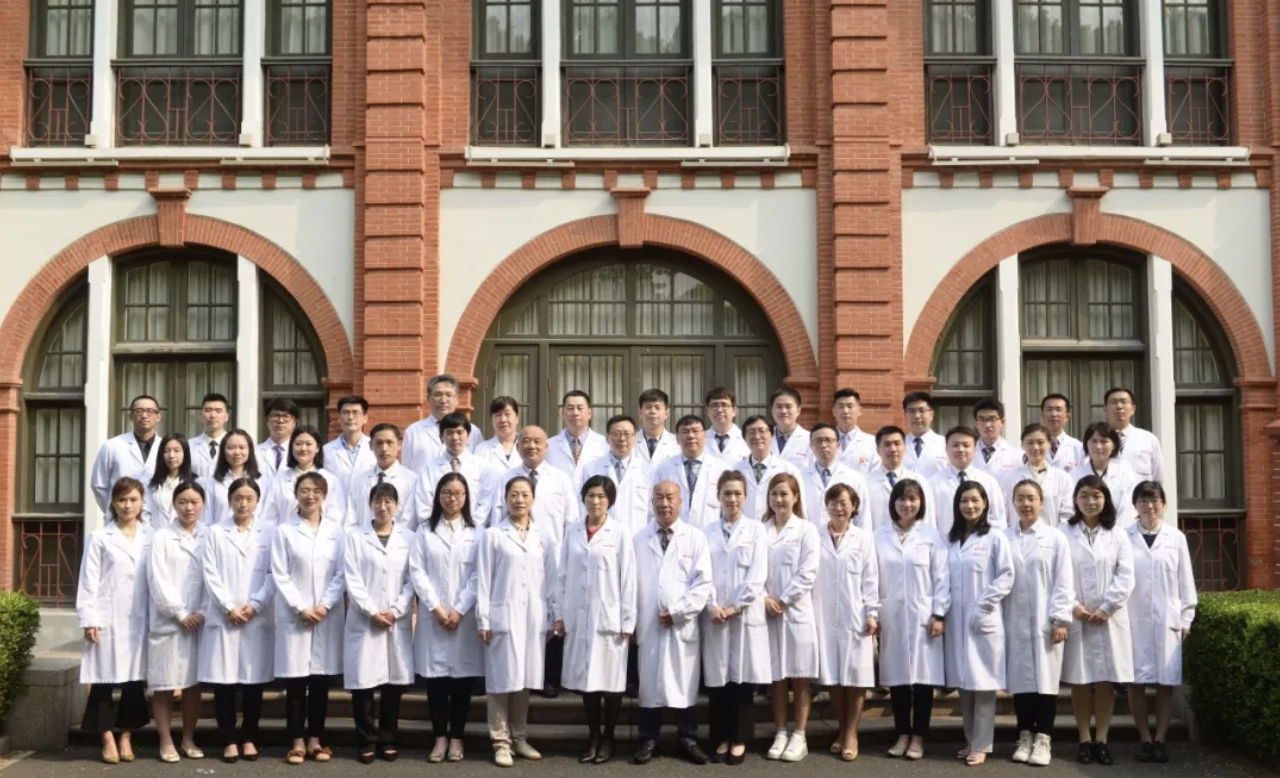
This article is reproduced from the official WeChat account of Ruijin Hospital, Shanghai Jiao Tong University School of Medicine. Information on the department, equipment, staffing, and research reflects the original publication.
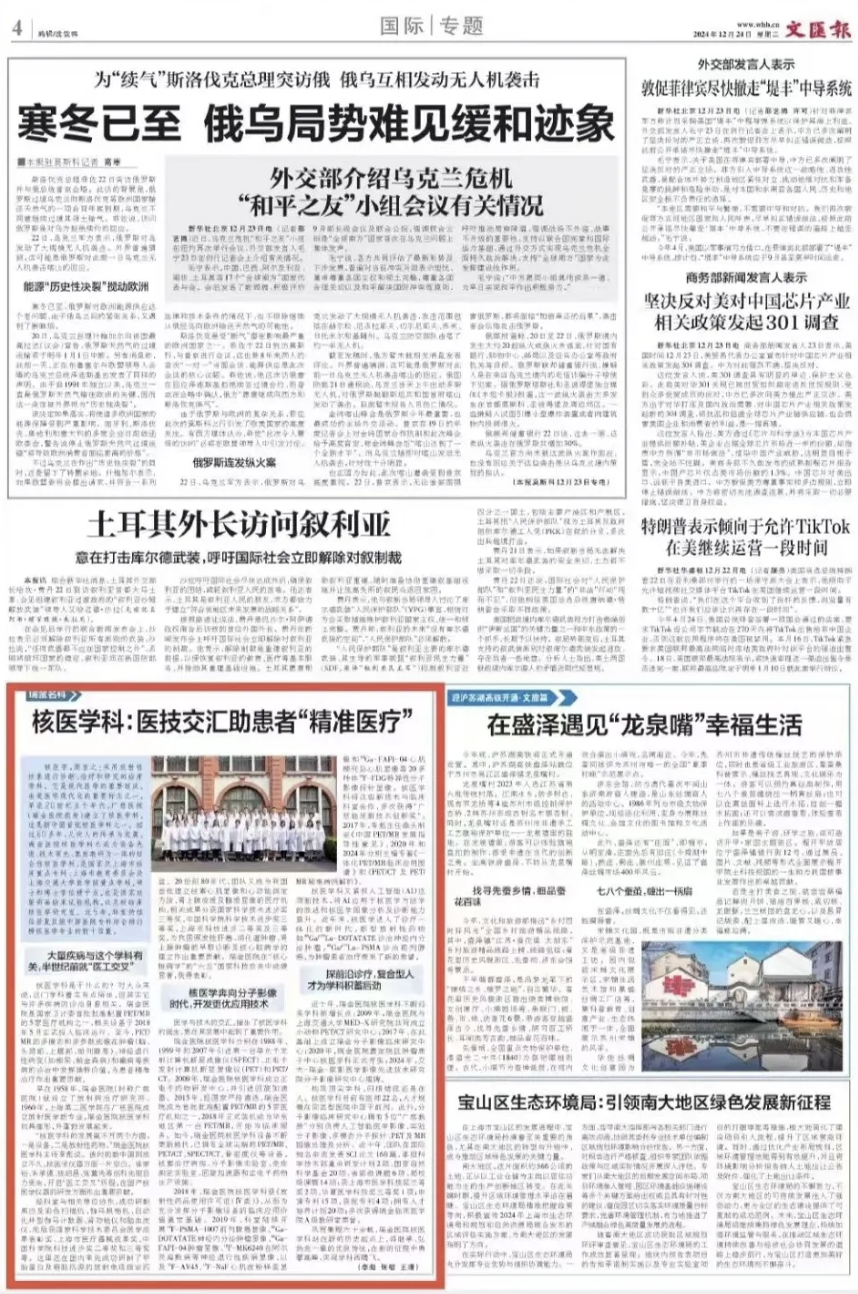
Nuclear medicine is a clinical discipline that uses radionuclides for diagnosis, treatment, and research. It is an important component of modern medicine and a key indicator of medical modernization. In the 1950s, Guangci Hospital, the predecessor of Ruijin Hospital, established one of the first nuclear medicine departments in the People’s Republic of China.
Following more than 60 years of development across successive generations, Ruijin Hospital’s Department of Nuclear Medicine has become a comprehensive department integrating clinical care, education, and research, supported by advanced equipment and technologies. It is designated as a National Key Clinical Specialty and a Shanghai Key Clinical Specialty, as well as a key discipline of the Shanghai Municipal Education Commission and Shanghai Jiao Tong University School of Medicine. It offers master’s and doctoral degree programs, is accredited to conduct clinical trials of radiopharmaceuticals, and houses the university’s Clinical Nuclear Medicine Research Laboratory. Over the five years preceding the original publication, the department consistently ranked among the top ten in nuclear medicine in the Fudan University China Hospital Specialty Rankings.
Connecting with the Diagnosis and Treatment of Many Diseases: Medical–Engineering Collaboration Began More Than Half a Century Ago
What does a nuclear medicine department do? Although the specialty may be unfamiliar to the general public, it plays a role in diagnosing and treating a wide range of diseases. Ruijin Hospital was one of the first five medical institutions approved by the former National Health and Family Planning Commission to install PET/MR equipment. The system entered clinical service in May 2018. Since then, its multimodal, multiparametric imaging capabilities have provided distinctive value in the diagnosis and management of tumors—including those of the brain, head and neck, upper abdomen, and prostate—as well as neurodegenerative disorders such as dementia and Parkinson’s disease, and epilepsy. These capabilities have contributed substantially to precision care.
As early as 1958, Ruijin Hospital, then known as Guangci Hospital, established an institute for the treatment and study of radiation sickness. In 1960, Shanghai Second Medical College established a new academic program in radiation medicine at Guangci Hospital, laying the foundations for the subsequent growth of Ruijin Hospital’s Department of Nuclear Medicine. “The development of nuclear medicine depends on two things: equipment and radiopharmaceuticals,” said Li Biao, Director of the Department of Nuclear Medicine at Ruijin Hospital.
In the early years of the People’s Republic of China, domestic nuclear medicine instrumentation was virtually nonexistent. Founding pioneers Xu Jiayu, Zhu Chengmo, Qian Shaochang, and Zhang Jixian pursued independent development and began collaborating across medicine and engineering, making important contributions to the development of nuclear medicine instruments in China.
Working with partner institutions, the department successfully developed monochrome and color scanners, gamma cameras, automated well-type gamma counters, renal function measurement instruments, and cerebral blood flow measurement instruments. These achievements received recognition from the State Science and Technology Commission for medical accomplishments, Shanghai awards for medical device development, and second- and third-class Science and Technology Progress Awards from the Chinese Academy of Sciences.
The department was also among the first in China to develop radioimmunoassay kits for alpha-fetoprotein and carcinoembryonic antigen. In the 1980s, it became one of the first medical institutions in China to establish radionuclide myocardial imaging and cardiac function assessment techniques, as well as adrenal cortical and medullary imaging.
These achievements received a third-class National Science and Technology Progress Award, a third-class Science and Technology Progress Award from the Chinese Academy of Sciences, and second- and third-class Shanghai Science and Technology Progress Awards. They contributed to the early diagnosis of primary liver cancer, gastrointestinal tumors, and adrenal tumors, and to the establishment of nuclear cardiology in China. Ruijin Hospital also received recognition for its achievements in nuclear cardiology under the national key science and technology research program during the Sixth Five-Year Plan.
Advancing into the Molecular Imaging Era and Developing New Clinical Applications The convergence of medicine and technology gave rise to nuclear medicine and has continued to drive its development.
Ruijin Hospital’s Department of Nuclear Medicine introduced its first single-photon emission computed tomography (SPECT) system in 1988, its first positron emission tomography (PET) system in 1999, and its first PET/CT system in 2007. In 2009, the department established a positron-emitting radiopharmaceutical research and development center and installed a cyclotron.
In 2015, following a rigorous national selection process, Ruijin Hospital became one of the first five medical institutions approved to install PET/MR equipment. Installed in 2018, the system was the first of its kind in eastern China and began serving clinical practice that year. Through continued equipment upgrades, the department has acquired advanced PET/MR, PET/CT, SPECT/CT, and bone densitometry systems. Its infrastructure also includes a radionuclide therapy ward, a molecular imaging laboratory, an immunoassay laboratory, a cyclotron, and facilities for producing positron-emitting radiopharmaceuticals.
In 2018, the department obtained a Class IV License for the Use of Radiopharmaceuticals, providing a foundation for expanding the clinical applications of its molecular imaging equipment. Beginning in 2019, the department progressively introduced imaging with more than 20 targeted molecular imaging probes beyond fluorine-18 fluorodeoxyglucose (¹⁸F-FDG). Applications included ¹⁸F-PSMA-1007 imaging for prostate cancer, ⁶⁸Ga-DOTATATE imaging for neuroendocrine tumors, ⁶⁸Ga-FAPI-04 tumor imaging, and ¹⁸F-MK6240 imaging for Alzheimer’s disease and other neurodegenerative disorders. The original article also lists ¹⁸F-AV45 and ¹⁸F-NaF imaging for cardiac amyloidosis, and ⁶⁸Ga-FAPI-04 myocardial imaging following myocardial infarction.
Through collaboration with clinical departments, these new technologies have received the Guangci Award for Innovation in New Clinical Technologies on multiple occasions.
In 2017, Director Li Biao led the development of Guiding Recommendations for the Development of PET/MR in China. He subsequently served as editor-in-chief of Atlas of Clinical Applications of Integrated PET/MR, published in 2020, and Analysis of Challenging PET/CT and PET/MR Cases, published in 2024.
The department has also adopted artificial intelligence (AI) to improve nuclear medicine methodologies and enhance image analysis and diagnostic capabilities. In recent years, nuclear medicine has entered a new era of theranostics, integrating diagnostic imaging with targeted radionuclide therapy. Radiopharmaceutical approaches such as ⁶⁸Ga/¹⁷⁷Lu-DOTATATE for neuroendocrine tumors and ⁶⁸Ga/¹⁷⁷Lu-PSMA for prostate cancer have opened new possibilities for cancer care. Exploring Advanced Diagnosis and Treatment: Building Momentum Through Multidisciplinary Expertise Ruijin Hospital’s Department of Nuclear Medicine has continued to establish new platforms for development.
In 2009, Ruijin Hospital and the MED-X Research Institute of Shanghai Jiao Tong University jointly established a small-animal PET/CT research center. In 2017, this platform was expanded into the Ruijin Clinical Research Center for Molecular Imaging.
In 2020, the nuclear medicine department at the Oncology Proton Therapy Center on Ruijin Hospital’s Jiading campus officially opened. In 2024, the Molecular Imaging Research Center of the joint Shanghai Jiao Tong University–Ruijin Hospital–United Imaging institute for advanced medical imaging technology was inaugurated.
Ultimately, building a leading specialty depends on its people. At the time of the original publication, the department had 22 physicians, placing it among the larger teams at comparable hospitals. The Clinical Research Center for Molecular Imaging also employed five Guangci Professors whose areas of responsibility included AI-based medical imaging, experimental molecular imaging, multimodal molecular probes, and PET and MR image processing and analysis. During the ten years preceding the original publication, the team published 160 Science Citation Index (SCI)-indexed papers in internationally recognized journals. It undertook two projects under the Ministry of Science and Technology’s National Key R&D Program, 20 projects funded by the National Natural Science Foundation of China, six provincial- or ministerial-level projects, and 14 bureau- or university-level projects.
The team received two third-class Shanghai Medical Science and Technology Awards and one third-class Huaxia Medical Science and Technology Award. It filed 15 patent applications, obtained four granted patents, and received support through 20 talent development initiatives. The department has also repeatedly been recognized as a Grade A teaching unit by Ruijin Clinical Medical College.
After more than six decades of development, Ruijin Hospital’s Department of Nuclear Medicine stands at a new stage in its history. Building on the traditions established by earlier generations, it aims to continue advancing the specialty and reaching new milestones.
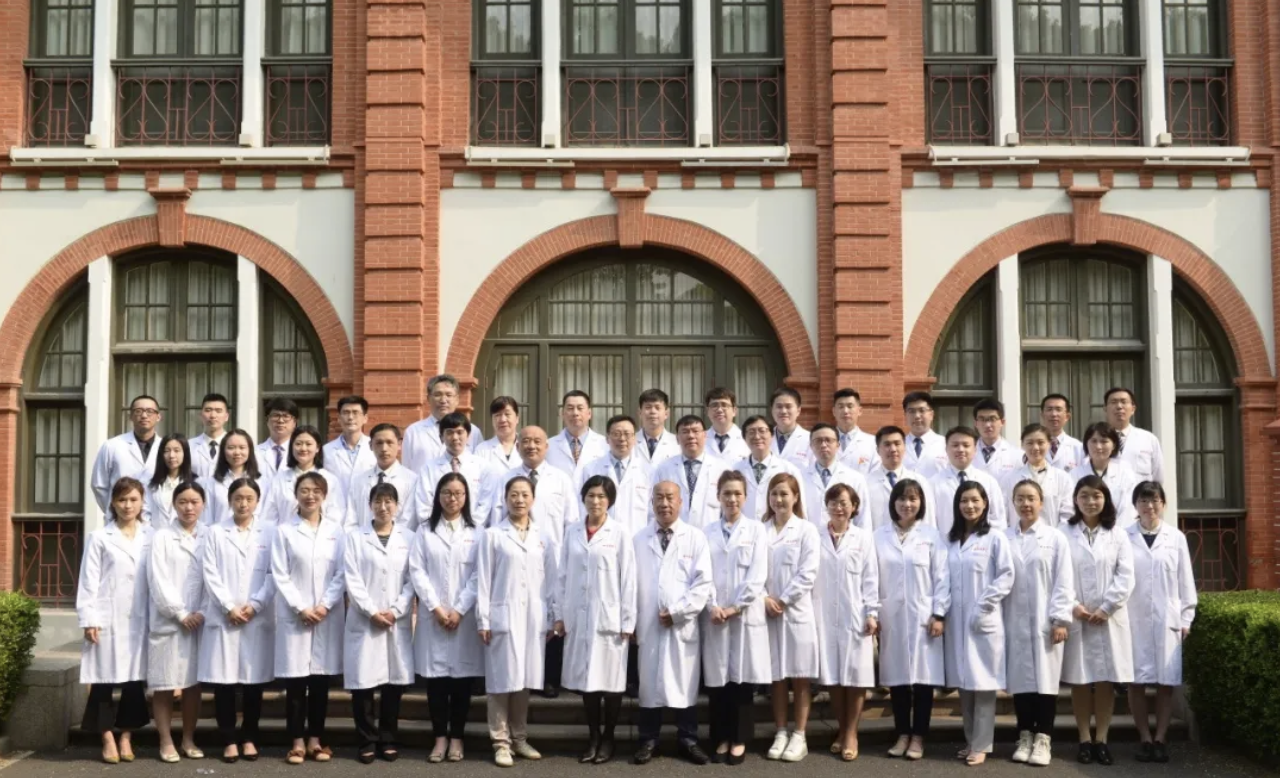
Original authors: Li Biao, Zhang Min, and Wang Jin Original editor: Wen Zhaoqi Original source: Official WeChat account of Ruijin Hospital, Shanghai Jiao Tong University School of Medicine Translation and republication notice: This article is an English translation of the Chinese original cited above. Copyright remains with the original authors and relevant rights holders. It is shared for educational and informational purposes. Its republication does not imply endorsement of this account or its services by the original authors or the medical institution concerned. The content does not constitute individualized medical advice. Decisions regarding examinations and treatment should be made by qualified physicians based on each patient’s circumstances.
Have questions about this topic?
Submit your case for a written specialist opinion — no obligation to travel.